Object Focus
Object Focus
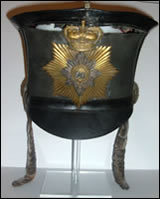
Bell Topped Shako
What does the word ‘Shako’ mean?
The word shako comes from the Hungarian name csákós süveg (peaked cap), which was part of the Hunagarian Hussar’s uniform of the 18th century. Many pieces of Britsh military dress came from our allies and enemies.
The ‘Bell Topped Shako’ was introduced into the British Army in 1828 and was replaced in 1844.
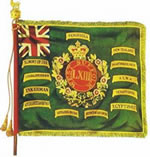
Both men and officers wore this type of Shako. This example is of the type worn by officers of the 96th Regiment of Foot (later the 1st Battalion the Manchester Regiment).
This specific version is thought to date from before 1839 when the large plate on the front of the Shako was replaced by a smaller brass circular one.
It was never a popular headdress as it was both heavy and uncomfortable. While impressive in appearance, adding to the height of the wearer, it provided little protection against enemy action or the weather. The infantry type was made of beaver skin, with a sunken lacquered top.
Until 1835 an upright worsted plume was worn from the front of the Shako. This was replaced in 1835 by a ball tuft. Both the plumes and tufts were white over red for Battalion Companies, green for Light Infantry, and white for the Grenadiers. This Shako no longer has its plume.
The chinstrap and gilt chain was attached to the lions' heads at the sides.
The conservation of this Shako was possible through grant-aid received from the MLA North West.
| Contact Information | |
|---|---|
Send us a Message |
![]() Museum of the Manchester Regiment Ashton Town Hall Market Place Ashton-under-Lyne OL6 6DL View local map
|
![]() 0161 342 2254
|
|