What to expect from Tameside Educational Psychology Service
Below is a helpful video which explains how we may work with parents and carers:
What an Educational Psychologist is
Educational Psychologists (EPs) are trained to understand how children and young people learn and behave. We usually have two degrees (undergraduate and doctorate).
Sometimes Educational Psychologist are called ‘EPs’ or ‘Ed Psychs’.
EPs work together with families, schools, educational settings and other services to work towards positive outcomes for children and young people up to the age of 25. We also work with a range of other professionals (e.g. childminders, teachers, Speech and Language Therapists or doctors).
What an Educational Psychologist Does
EPs aim to help schools and settings meet young people’s needs in an informed and inclusive way. EPs are generally asked to become involved with young people who are experiencing some difficulties, to help provide a clearer understanding of their strengths and needs, and look at ways to best help the young person to make progress.
EPs may support young people with:
Learning and developing new skills (Cognition and Learning).
Talking, listening and communicating with others (Communication and Interaction).
Making friends, managing their emotions or behaviours (Social, Emotional or Mental Health).
Seeing, hearing, getting around or processing sensory information (Sensory and/or Physical).
How do we become involved?
Before our involvement
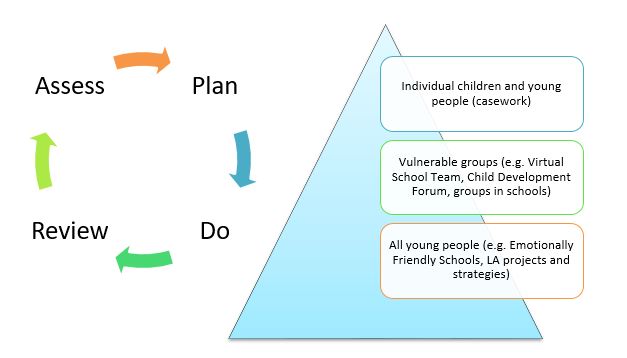
If you have concerns about your child or young person you may want to discuss these with the class teacher or key person and/or Special Educational Needs Coordinator (SENCo). Schools use something called a graduated approach to make sure children’s needs are understood and supported. In Tameside, this resource is for anyone supporting children and young people with Special Educational Needs and Disabilities (SEND). It shares helpful guidance and approaches to support children from early years through to post-16 education. The process often follows a cycle called Assess – Plan – Do – Review, which means looking at your child’s needs, planning support, putting it into place and reviewing how well it’s working. Over time, this helps everyone better understand your child and what support they need to make progress. This ongoing collection of understanding is especially important when planning for the future, including moving between classes, schools or different settings. For more information, please visit: Welcome to Tameside’s Graduated Approach - Tameside SEND Local Offer or click here to access the PDF version.
If your child is not making the progress we would expect, even after trying different types of support, the SENDCo may then speak with Tameside Educational Psychology Service if they would like further support and advice. If Educational Psychology involvement is appropriate, a member of staff will speak to you about how we might help your child or young person and you will be asked if you would like to go ahead with Educational Psychology Involvement. The school or setting will then arrange our visit.
During our involvement
We meet with you to find out your views about your child or young person’s interests, strengths, needs and future goals and aspirations. You know your child or young person best so your views are invaluable in developing an understanding of their strengths and needs.
Our involvement might also include: meeting with your child or young person to gather their views, assessing their strengths and needs, observations, person-centred meetings, looking at their work, and individual or group intervention.
Next steps will be agreed so that everyone is clear who is doing what and by when.
A written record will be sent to the school or setting and to you.
Where possible we will review the outcomes set with yourself and staff from the school or setting.
How We Work
We work at many levels to try and meet need and support all children and young people’s wellbeing and development across Tameside. Please see diagram below.
Other Types of Activities we do in Schools
Meetings with young people, families, carers and other professionals.
Liaising with schools and multi agencies, e.g. speech and language therapists.
1:1 sessions (consultations) with staff (Teachers, Teaching Assistants and SENCos) to support their understanding of children/young peoples’ SEN.
Training for staff.
Pupil observations, assessments or direct work with pupils.
Writing reports.
Signposting to other appropriate services.
If More Support is Needed
Most children’s needs are met at SEN Support.
If needed, the school can request additional educational support by requesting an Education Health and Care Plan (EHCP).
By clicking 'Accept', you agree to the storing of cookies on your device to enhance site functionality including analytics, targeting and personalisation